
Emergency Care During a Stroke
If you think you or someone you know is having a stroke, call 911 immediately or go the closest emergency room.
Find an Emergency RoomBE FAST: What are the Signs and Symptoms of a Stroke?
A stroke is a medical emergency where every second matters. Recognizing the signs quickly can save a life - or prevent permanent disability. When blood flow to the brain is interrupted, brain cells begin to die within minutes. Immediate treatment can make the difference between full recovery and long-term complications.
According to the American Stroke Association, nearly 800,000 people experience a stroke each year in the U.S. Early recognition and emergency treatment can greatly improve survival and recovery outcomes.
Stroke Signs and Symptoms
According to the Mayo Clinic, the symptoms of stroke vary depending on which part of the brain is affected, but common signs include:
- Sudden numbness or weakness in the face, arm, or leg (especially on one side of the body)
- Sudden confusion, trouble speaking, or difficulty understanding others.
- Sudden vision problems in one or both eyes
- Sudden dizziness, difficulty walking, or loss of balance and coordination
- Severe headache with no known cause
- Fainting or loss of consciousness
Learn More About Stroke Care
B.E.F.A.S.T. - Remember the Warning Signs
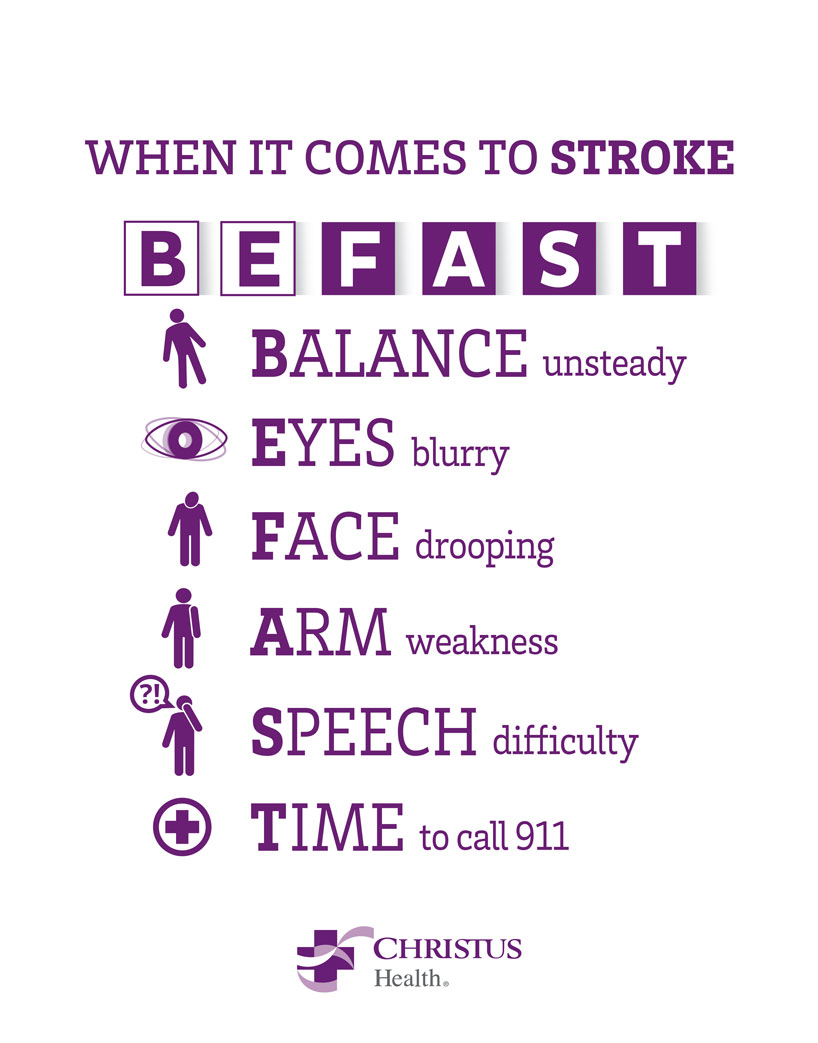
The B.E.F.A.S.T. method is an easy way to recognize stroke symptoms quickly:
- B – Balance: Sudden loss of balance or coordination
- E – Eyes: Sudden vision changes or loss
- F - Face Drooping: One side of the face droops or feels numb
- A - Arm Weakness: Weakness or numbness in one arm
- S – Speech Difficulty: Slurred or garbled speech, difficulty speaking or understanding
- T – Time to Call 911: Call 911 immediately - every second counts
Strokes are medical emergencies, and time is of the essence when it comes to treatment. The faster you act, the more likely it is that the person will have a positive outcome.
What Mimics a Stroke but is Not a Stroke?
Some conditions may appear like a stroke but are not:
- Seizures
- Migraines with aura
- Low blood sugar (hypoglycemia)
- Multiple sclerosis (MS)
- Bell's palsy
These are sometimes called "stroke mimics." Unlike true strokes, they may not cause permanent brain damage but still require urgent medical evaluation.
What are 5 Warning Signs of a Stroke?
The five classic warning signs are:
- Sudden numbness or weakness (face, arm, leg)
- Sudden confusion or trouble speaking
- Sudden vision loss or double vision
- Sudden dizziness, loss of balance, or difficulty walking
- Sudden severe headache without a known cause
If you notice any of these symptoms - call 911 immediately.
What Are the Three Main Causes of Strokes?
- Ischemic Stroke - caused by a blood clot or blockage in an artery that supplies the brain (about 87% of all strokes).
- Hemorrhagic Stroke - caused by a burst blood vessel that bleeds into the brain.
- Transient Ischemic Attack (TIA) - sometimes called a "mini-stroke," caused by a temporary blockage that resolves within minutes to hours but signals future stroke risk.
How to Stop a Stroke in Progress?
A stroke cannot be stopped at home. The only way to minimize damage is to seek emergency medical treatment immediately.
- Doctors may administer clot-busting medication (tPA) if given within 3 - 4.5 hours of symptom onset.
- In some cases, surgeons can remove a clot using procedures called mechanical thrombectomy
The faster treatment begins, the greater the chance of recovery.
Who is Most at Risk of Stroke?
Anyone can have a stroke, but risk is higher for:
- People over age 55
- Men (though women also face high risk, especially after menopause)
- African Americans, who have nearly twice the risk compared to white populations
Medical conditions and lifestyle factors that increase stroke risk include, according to the Centers for Disease Control and Prevention:
- High blood pressure (hypertension)
- Diabetes
- Heart disease (including coronary disease and atrial fibrillation)
- Family history of stroke
- Obesity
- Smoking
- Excessive alcohol use
- Sedentary lifestyle
How are Strokes Diagnosed?
According to the Mayo Clinc, doctors use a combination of tests to confirm and evaluate a stroke:
- Physical examination - checking movement, reflexes, speech, and vision
- Blood tests - to evaluate clotting and cardiovascular risks
- Imaging tests - CT scans, MRIs, and angiograms to detect brain damage or blockages
Different Types of Strokes
According to the Mayo Clinic, here are the different types of stroke.
- Ischemic Stroke - blocked artery blood flow
- Hemorrhagic stroke - bleeding in the brain from a ruptured vessel
- Transient Ischemic Attack (TIA) - temporary blockage, often a warning sign
- Subarachnoid Hemorrhage - bleeding between the brain and its surrounding tissues, often from an aneurysm
How can a Person Prevent a Stroke?
According to the Centers for Disease Control and Prevention, Prevention begins with lifestyle choices and medical management:
- Eat a balanced, heart-healthy diet
- Exercise regularly
- Avoid smoking
- Limit alcohol consumption
- Control high blood pressure, cholesterol, and diabetes
- Manage stress and get regular medical checkups
It’s also important to get regular check-ups with your doctor and to be aware of any family history of stroke or cardiovascular disease.
If you have any risk factors for stroke, it’s important to talk with your healthcare provider about how to reduce those risks. Schedule an appointment with your healthcare provider today.
Check Your Risk For Stroke
Complete the CHRISTUS Health Stroke Assessment to receive a report with your stroke risk factors and tips on reducing those risks.
