
What Support Really Feels Like as an IMC Nurse
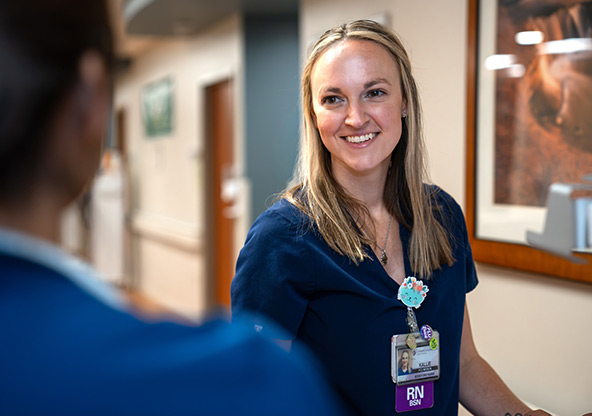
Kallie Brewster, a registered nurse, didn't start her new role at CHRISTUS Health in San Marcos planning to go back to school. Brewster, who now works on the intermediate care (IMC) unit, was just looking for a strong team.
However, school started to look like an option for Brewster because she saw that she could do way more than she thought was possible.
The pace on the IMC floor is fast. The patients are more complex. Every shift brings something different: cardiac care, infections, stroke recovery, and patients stepping down from intensive care.
Over time, the experience started to change how she saw her future. She realized she wanted to take the next step.
"It really just made me realize that I can do more than I think I can," Brewster said. "You're exposed to so many different types of patients, and it helps you become a more well-rounded nurse because you see both basic and higher levels of care."
Now, Brewster is back in school to become a nurse practitioner.
What Support Can Make Possible
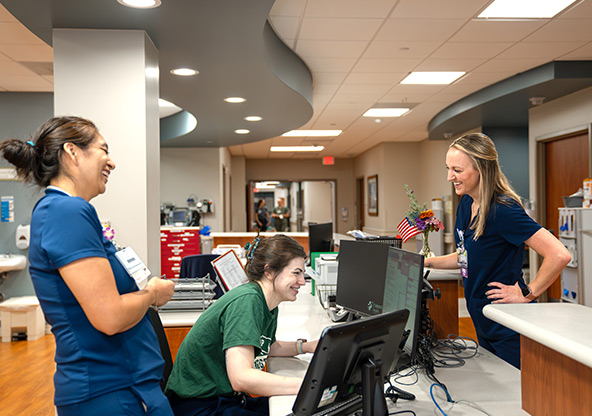
Across the country, IMC nurses are facing higher workloads and a growing number of patients who need close, complex care. Studies show step-down nurses spend more time in direct patient care than those in standard units, giving them more hands-on time with patients and broader range of experience.
Like Brewster, IMC nurses often feed into the acute-care and critical-care nurse practitioner pipeline using their background as a springboard to advance their career.
"But the thing that brought me here was the team and the way nurses are treated," Brester said. "Which was surprising and refreshing."
Leadership That Steps In
Brooke Vierig, also a registered nurse at CHRISTUS Health on the IMC unit in San Marcos, didn't expect to be surprised either.
During her interview to join CHRISTUS, a nurse leader joined late and apologized because she was taking care of patients on the floor.
"Boom. Immediately, that got me," Vierig said. "Okay, now I'm going to pay attention, because this hospital leader is helping."
Vierig said that kind of help from leadership has often been absent in some of her roles in her 25-year healthcare career. Vierig has worked in rural Wyoming, Alaska, and hospitals across the country - she had already seen almost everything.
"If I go to any of the leadership team, they'll say, 'What do you need, and how can I help?" Vierig said. "They're the first ones to step in."
Every Patient is Everyone's Patient
It does not matter what the situation is, Vierig said, whether a patient needs more attention than expected, or if a patient is preparing for a procedure, or if a family member has questions.
She said it feels like every patient is the entire team's patient. That mindset is simple, but it changes care and teamwork.
I've worked in hospitals where somebody says, 'That's not my patient,'" she said. "Here, it's, 'Let me help.'"
That mentality has helped Vierig stay more present. It gives her room to focus on the patients in front of her and explain what's happening.
Feeling Like Part of the Team From Day One
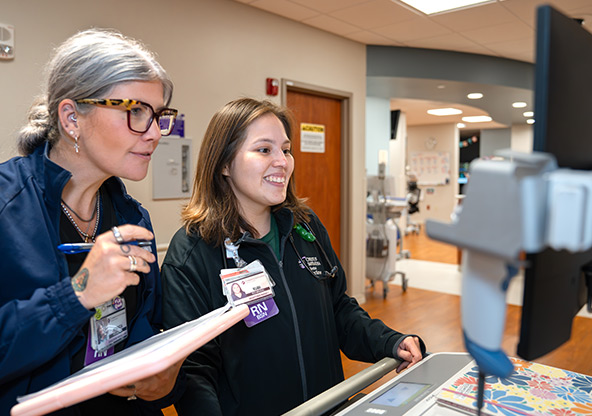
Support also shows how people are welcomed into the team.
"You feel welcome the minute you come in," said Rubi Manasiya, who has worked at CHRISTUS Health's San Marcos hospital for more than a decade and is a registered nurse on the IMC unit.
"The first day you're working, you feel like you've known everyone for a long time."
As a result, Manasiya said that new nurses will ask questions sooner. Teammates step in without hesitation. People trust each other.
For some nurses, that support helps them get through a shift. For others, it changes what they see for their future.
For Brewster, it meant going back to school and preparing for the next stage of her career.
For Vierig, it meant finding a place she doesn't want to leave.
And for Manasiya, she's excited to get to work.
"I'm not counting down the days until I can go somewhere else. I want to be here," she said.
Join the Team
Ready to feel supported?
Find your place on the nursing team at CHRISTUS Health in San Marcos.
